Harbor Freight Tools
- 4.7
- Rating
- 1.00M
- Installs
- Free
- Price

 Analysis by App-foxy
When I need to check Harbor Freight deals before heading out for a tool, I would rather have a focused shopping app than search through a general marketplace and sort through unrelated sellers. Harbor Freight Tools is built around that simple trip: browse the retailer’s products, look for current savings, and decide whether visiting a store or continuing to compare items makes sense. I found it most useful when I already had a project in mind but wanted to control the cost before buying.
This is a free shopping app from Harbor Freight Tools USA, Inc., aimed at people looking at generators, air compressors, tool storage, hand tools, and other workshop equipment. Its audience is broader than professional tradespeople. A homeowner preparing for repairs, a hobbyist organizing a garage, or someone comparing equipment for an occasional project can all find a reason to use it. The Everyone content rating also makes it suitable for general household shopping rather than a specialist-only audience.
The app has built a strong following, with a 4.7 average from around 52 thousand ratings and more than a million installs. That does not automatically make every part of the experience perfect, but it does match my impression that the app is straightforward once you understand what it is designed to do. It is primarily a retailer companion, not a general tool-advice platform or a replacement for hands-on product research.
You May Also Like

 Blood Strike: 2.5 Anniversary
Blood Strike’s Loadouts Turn Every Drop Into a Tactical Gamble
A close look at Blood Strike’s custom loadouts: how fast access to signature weapons reshapes its battle royale rhythm, rewards preparation, and narrows the gap between fights.

 Pandora - Music & Podcasts
Pandora’s Music Is Easy to Start, but Harder to Recover
Pandora’s strength is its low-effort path from a seed to a station. Its weak spot is how much confidence it asks you to place in connection, setup, and quiet recovery.

 8 Ball Pool
 Is Built on Rivalries, Rematches, and Routine
A close look at the rivalries, rematches, shared routines, and unanswered safety questions that turn a quick pool match into a persistent mobile community.

 Samsung Music
’s Quiet Strength Is Playing What You Already Own
Its reach comes less from spectacle than from dependable access to a personal library. That simplicity is both the app’s strongest retention engine and its ceiling.

 AccuWeather: Weather Radar
AccuWeather Review: A Quick, Clear Forecast for Everyday Decisions
For everyday plans, the best forecast is the one you can understand quickly. AccuWeather makes rain timing, radar, and local conditions easy to act on, with a few trade-offs.

 Hill Climb Racing
Why Hill Climb Racing Still Turns Crashes Into One More Run
A tiny car, a bumpy hill and one more upgrade: Hill Climb Racing keeps resurfacing because its simple chaos makes every near-miss feel personal.
More From Our News Desk
View All News


From installation to a useful first visit
Before I open the catalog, I like to decide what would make the visit worthwhile: a particular tool, a project budget, or a coupon worth checking. That small bit of preparation keeps browsing focused and makes it easier to judge the app as a practical shopping companion rather than a source of impulse buys. From there, the next step is learning what to expect on a first visit.
What to expect when you open it
My first expectation would be wrong if I treated this as a full workshop-planning assistant. The app is better understood as a digital front door to Harbor Freight. It helps me see what the retailer offers and identify opportunities to spend less, while the actual decision about quality, capacity, compatibility, and long-term value still belongs to me.
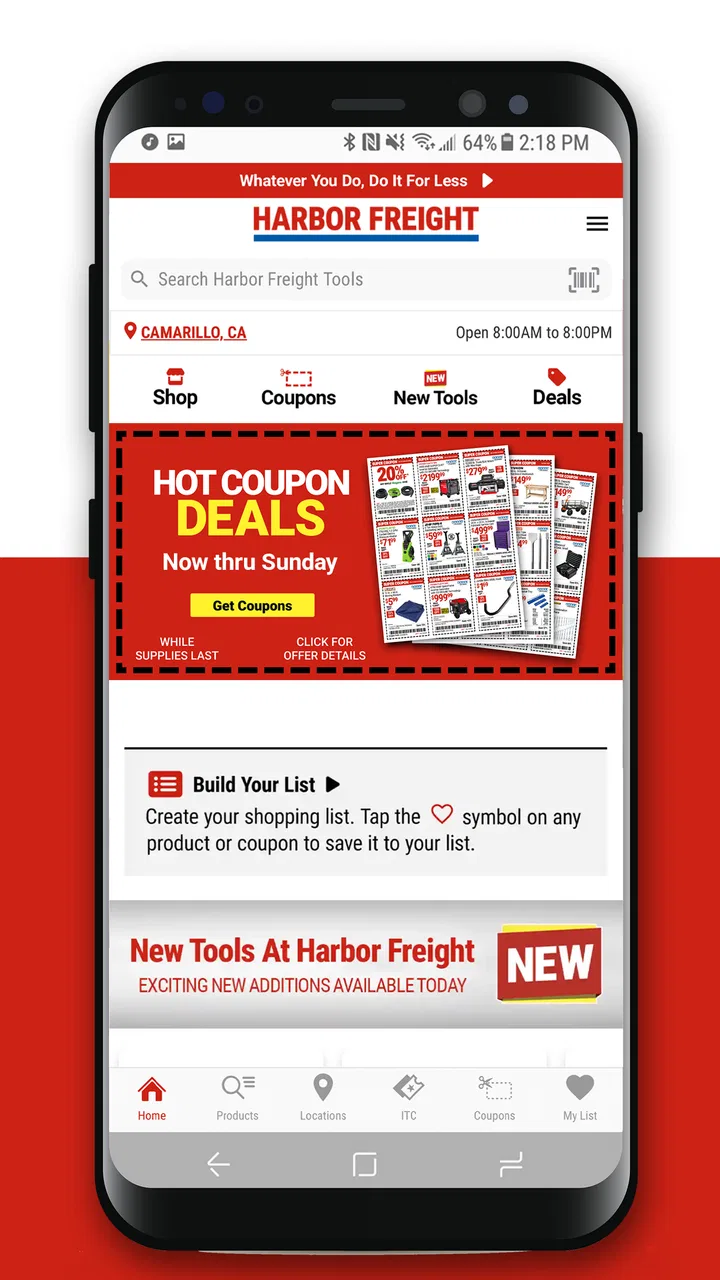
The store summary points toward coupons and major equipment categories, and that emphasis matters. If I am shopping for a generator, air compressor, or storage solution, I want to get to the relevant product area quickly rather than browse an endless marketplace. The narrower focus is a strength when I already know the type of item I need. It is less helpful if I want a neutral comparison across many brands and retailers.
I would install it before visiting a Harbor Freight location, not only while standing in an aisle. That gives me time to look at the item category, read the available product information, and think about whether the purchase fits the project. A rushed in-store decision can make a low headline price feel more important than the right size, power, fittings, or storage arrangement.
The app runs on devices using Android 8.0 or later, and the current version is 11.17.9. For a first-time user, the practical point is simple: check compatibility before planning your shopping trip, especially if an older phone is still your main device. The app itself is free, so the cost decision begins with the products rather than an entry fee.
A first setup that stays manageable
I recommend starting with one clear purpose instead of trying to explore every category. If my project is building a basic home workshop, I might begin with tool storage. If I am preparing for storm-related power interruptions, I would start with generators. This keeps the first session focused and makes it easier to judge whether the app is helping.
During setup, I would keep a short note beside me with the details that matter for the purchase: the space available, the work I expect to do, the accessories I already own, and the maximum amount I want to spend. That may sound old-fashioned, but it prevents the catalog from deciding my needs for me. A product page can show an attractive option; it cannot measure my garage or know which fittings are already in my toolbox.
I also suggest checking the app before leaving home when a coupon or promotion is part of the reason for the trip. Savings are useful only when I understand the conditions and know which product they apply to. I would not assume that seeing a deal means every similar item qualifies. Reading the offer carefully before reaching the checkout is a small habit that avoids an awkward correction at the register.
Another useful setup habit is to separate “research” from “buy now.” On the first pass, I look at the product category and narrow down realistic candidates. On the second pass, I check whether the item actually fits the project. This two-step approach is especially valuable with equipment such as compressors and generators, where the cheapest-looking option may not be the most suitable one.
The first successful action
For me, a meaningful first success would be finding one relevant item and turning that discovery into a prepared store visit. For example, suppose I need a compact storage solution for a garage corner. I would open the storage category, inspect the available choices, note the dimensions and configuration that appear suitable, and then use the app’s shopping information to decide what to verify before buying.
The important result is not merely opening a product screen. It is leaving the app with a clear next action: visit a store, continue comparing, or postpone the purchase until I have measured the space. That distinction keeps the app useful even when I do not buy immediately. Good shopping software should help me avoid a bad purchase, not pressure me into making one.
For a generator, my first successful workflow would be more cautious. I would write down what I need to power, distinguish essential equipment from convenient extras, and then compare the available options with those requirements. I would not rely on a general product impression alone. Generator purchases can involve noise, fuel, placement, extension cords, and safe operation, so the app is a starting point for selection rather than the entire safety plan.
With an air compressor, I would think about the tools I intend to use rather than choosing based only on the compressor’s appearance or advertised size. Nailers, inflators, and other accessories can have different demands. The app can help me locate the category and compare products offered by the retailer, but I still need to check compatibility and understand the equipment before placing an order or carrying it home.
Where first-time shoppers can become confused
The biggest possible confusion is treating a coupon-centered shopping experience as if every price shown were a final, universal bargain. A discount can be valuable, but the real value depends on the item, the timing, the project, and whether I would have bought it anyway. I try to compare the complete purchase rather than celebrating a percentage or a low starting price in isolation.
Another point that deserves attention is the difference between product discovery and product validation. Finding a tool in the app does not answer every practical question. I still want to verify capacity, dimensions, included accessories, power requirements, and whether the item suits the job. This is where a physical store, a manual, or advice from someone experienced may be more useful than another minute of browsing.
I would also avoid assuming that a product category tells me how easy ownership will be. A tool chest may fit the budget but not the available doorway. A compressor may be affordable but inconvenient for the accessories I use. A generator may look appropriate but be unsuitable for the equipment I consider essential. The app helps me narrow the retail selection; it does not remove these real-world trade-offs.
There is also a subtle difference between shopping for a one-time repair and building a long-term collection. For a single household task, a lower-cost tool may make sense if it handles the job and is used safely. For frequent professional work, durability, serviceability, ergonomics, and downtime may matter more than the initial deal. In that situation, I would use the app for Harbor Freight’s selection but compare the decision with specialist retailers and professional reviews.
How it compares with usual shopping alternatives
Compared with a general marketplace app, Harbor Freight Tools feels more focused. I do not have to filter through unrelated brands and sellers to reach Harbor Freight’s own categories. That makes it quicker for a shopper who has already decided to consider this retailer. The trade-off is narrower choice: someone seeking the widest brand selection or the most independent price comparison may prefer a broad marketplace.
Compared with visiting a store without preparation, the app gives me a better chance to think before the purchase. I can look at the category from home, consider the budget, and arrive with specific questions. The store still has advantages when I need to judge the physical size, handle, drawer movement, or overall build of an item. For large equipment and storage products, that hands-on check can be more informative than a screen.
Compared with a general coupon app, this one is more relevant when the coupon leads directly to a Harbor Freight purchase. A separate coupon service may collect offers from many retailers, but it can also add another layer between the deal and the item. Here, the shopping context is more direct. On the other hand, a general service is better if my priority is finding the lowest price across competing stores rather than staying within Harbor Freight’s catalog.
Compared with a dedicated tool-review site, the app is closer to the transaction than to independent testing. I would use a review site or specialist forum when reliability, performance under heavy use, or detailed comparisons are central to the decision. I would use this app when I want to explore Harbor Freight’s available products and savings with less friction.
Practical workflows that make it more useful
One useful workflow is the “measure first, browse second” rule. Before looking at storage cabinets or work surfaces, I measure the intended wall, doorway, and clearance around the item. Then I use the app to narrow the shopping search. This avoids one of the most expensive mistakes in workshop shopping: buying something that technically fits the category but not the room.
A second workflow is to create a project-based shortlist on paper rather than collecting every tempting deal. For a home repair, I might list the required tool, the consumables, and one optional upgrade. The app becomes a way to check those specific items instead of a stream of distractions. This is especially helpful for first-time users who are vulnerable to buying a bargain simply because it appears at the right moment.
A third insight is to treat coupons as a timing tool. If I know a project is coming but does not need to start today, I can check the app before purchasing and decide whether the current offer changes the timing. That does not mean delaying an urgent repair indefinitely. It means separating an actual need from a convenient excuse to buy more equipment.
For larger purchases, I would use the app in two passes. First, I identify the likely product family. Next, I compare the ownership details that affect the total experience: where it will live, how it will be moved, what accessories it needs, and how often I expect to use it. This is a better method than choosing the first item that appears affordable.
Who should use it and who should skip it
I think the app is a good fit for Harbor Freight regulars, budget-conscious homeowners, DIY beginners, and hobbyists who want a convenient way to browse the retailer’s categories and check savings before a trip. It is also useful for someone who is not ready to buy but wants to turn a vague project into a more concrete shopping list.
I would be more cautious recommending it to a professional who needs deep technical comparisons, independent durability testing, or a broad selection from competing manufacturers. That person may still appreciate the retailer’s catalog, but this app should be one research tool among several rather than the final authority.
It is also not the right choice for someone who wants a universal shopping dashboard across many stores. The focused Harbor Freight experience is exactly why I like it for a targeted visit, but that same focus limits its usefulness when the main goal is cross-retailer price hunting.
The next step after the first visit
After I have used the app once, I would make it part of a simple purchase routine: define the project, check the relevant category, review the available savings, verify the product requirements, and only then decide whether to visit a store or continue researching. This routine keeps the app in its proper role and makes the experience more reassuring for a first-time shopper.
I would also keep expectations realistic about what the app can solve. It can make Harbor Freight shopping more organized and help me notice opportunities I might miss during an unplanned visit. It cannot decide whether a generator is safe for my situation, whether a compressor suits my tools, or whether a storage unit will survive the way I work. Those judgments still need common sense and, when appropriate, expert advice.
My overall opinion is positive because the app has a clear purpose and does not require me to turn a basic Harbor Freight visit into a complicated research project. The free price makes it easy to try, and its broad audience means it is approachable for everyday shoppers. I would simply pair it with measurements, product research, and a little patience before buying substantial equipment.
My recommendation is to use it as a preparation tool, not as a substitute for judgment. If you already shop at Harbor Freight, Harbor Freight Tools is a practical way to begin with a category, find a realistic option, and arrive at the next step better prepared. If you need independent comparisons across many retailers, a broader shopping service will serve you better. For a first-time user with a specific project and a clear budget, though, it offers a sensible path from installation to a genuinely useful shopping decision.
FAQs for Harbor Freight Tools
01What features does the Harbor Freight Tools app offer?
The Harbor Freight Tools app provides a range of features including access to exclusive coupons, the ability to browse the full product catalog, and a store locator. Users can also track their rewards points, view current sales, and receive notifications about upcoming promotions and events.
02Is the Harbor Freight Tools app available for both Android and iOS devices?
Yes, the Harbor Freight Tools app is available for download on both Android and iOS platforms. You can find it in the Google Play Store for Android devices and the Apple App Store for iOS devices. This ensures that most smartphone users can take advantage of its features.
03Does the Harbor Freight Tools app require a user account to access all features?
While you can browse products and view store locations without an account, creating a user account is necessary to access features like tracking rewards points, saving coupons, and receiving personalized notifications. An account enhances the app experience by personalizing it to your shopping habits.
04How regularly are the deals and coupons updated in the app?
The deals and coupons in the Harbor Freight Tools app are updated frequently, often weekly or in line with major promotions. Users are encouraged to check the app regularly to take advantage of the latest discounts and offers, ensuring they don’t miss out on any potential savings.
05Can I use the Harbor Freight Tools app to make purchases directly?
Currently, the Harbor Freight Tools app does not support direct purchases. However, it allows users to browse products, check prices, and locate nearby stores where they can make their purchases. This app is designed to enhance the in-store shopping experience rather than replace it.
Pros
- User-friendly interface for easy navigation.
- Wide range of tools and equipment available.
- Regular updates with new features.
- Exclusive member discounts and deals.
- Quick access to user reviews and ratings.
Cons
- Limited customer service support in app.
- Occasional slow loading times.
- In-app notifications can be overwhelming.
- No offline mode for browsing products.
- Some items lack detailed specifications.

Harbor Freight Tools
Gallery